#9 Modalities, technology, user task and team work evaluation

Modalities

Input modalities

Because our product’s main purpose is to give feedback to the user during exercise, input modalities are not as important as output modalities. However, there must be some way for user to control the device, so input modalities need to be shortly discussed too. Since the training clothes themselves will be accessed through the companion app installed on a user’s smartphone, the modalities are restricted to those that the phone offers.

The aim is that there is no need for the user to manipulate the device during the exercise. Before the exercise it should be enough to choose what sport one is going to do and, possibly, what are the goals for this particular exercise. For these kinds of things regular touch input is quite sufficient. If there was a need to communicate with the device during the exercise, then some kind of voice control should be considered. If, for example, the app gave some suggestions that needed a response from the user, a short answer (yes/no) should be enough, in order not to divert the user’s attention from the task at hand.

Output modalities

There are very few sports in which the athlete can look at the screen of their phone while exercising. Therefore, the most important output modality cannot be visual. Our product must be able to give feedback to the user without using the screen of the phone. In the future, some kind of smart glasses might be popular enough to be feasible as the channel of visual output. However, unless visual channel can bring significant advantage over other modalities, our main modality will be auditory.

Apart from being easier to use in sports situations, auditory feedback has some other benefits compared to visual feedback. For example, it is more salient, which makes it a good choice when transferred information has high priority. In addition to that, auditory modality, unlike visual, is not dependent on the direction of attention. However, its disadvantage is that it may steal attention from more important things, which may be risky in some contexts. (Cao et al. 2010, 65–66)

Tactile feedback would also be an interesting possibility for this kind of product. However, since it can be intrusive, and since we didn’t have time to conduct user research on the acceptability of this kind of stimuli in the context of sports equipment, it is presented here only as an interesting prospect for the future development of this product.

Technology

What is the technology behind the product?

The product works by using surface electromyography (EMG) technology. EMG technology records the movement of the muscles by tracking the electrical bursts the muscle generates when contracting, which propagates trough adjacent tissue and bone and can then be recorded from neighboring skin areas. Muscle contraction process starts in the brains motor cortex from where neural activity signals to the spinal cord information about the movement which is sent via motor neurons to the relevant muscle. The motor neurons innervate the muscle at the neuromuscular junction which inturn releases Calcium ions in the muscle. This creates a mechanical charge in the tension of the muscle and depolarization, the difference in current can be detected with EMG. (Farnsworth 2018, Johns Hopkins Medicine)  

EMG activity is linearly related to the amount of muscle contraction and number of contracted muscles. In essence, the stronger the contraction and the higher the number of muscles activated, the higher the measured voltage amplitude. (Farnsworth, 2018)  

Traditionally EMG technology is used in clinical tests with EMG electrodes which are small needles that go through the skin into the muscle (URMC). These tests are usually performed within hospitals or training facilities with large machines and wires going from the electrodes to the machine. It is usually used to study deep muscles or muscles that have small cross-sectional area. The main advantages the intramuscular EMC has is that it is able to selectively detect EMC signals during static and dynamic conditions and simultaneously minimize crosstalk (Péter et al. 2019).  

It is also possible to acquire EMG signals non-invasively by placing the electrodes on the skin surface with surface EMC (sEMC) electrodes. Invasive electrodes (or electrodes with needles) are not possible in our use case, so this is why we’ll be using surface EMG technology or sEMC. This has been proven to be a valid method to track muscle fatigue as its results are reasonable and easily recognizable and the method to analyze the results requires very small computational weight which enables it to be used in low-cost systems (del Toro et al. 2019, Petér et al 2019, Perry 1981). This is one of the major reasons why we believe this technology fits perfectly in our use case.  

The benefits of the sEMC technology is that it is quite easy to start using and it still collects accurate enough data to make meaningful conclusions and recommendations on. It is  simple to analyse as the output is trivial and it doesn’t require huge amounts of computer power to analyse. (Garcia & Viera 2011) It is possible to get the data in realtime so that user sees the results simultaneously as working out. In addition, the electrodes are light and durable so they will endure wear and tear of users.

How is the technology used?

We will use sEMC in our product by imbedding the electrodes into a piece of clothing. The placing of the sensors is not extremely precise because they are able to collect signals from a large area, but they need to be small enough that it doesn’t affect the usability of the cloth. We would suggest that the sensors are in a mesh within the fabric in the critical areas and connect the mesh to a removable device that collects and sends the data to the companion application where it can analyse the data and show the results to the user.  

We will use sEMC in our product by imbedding the electrodes into a piece of clothing. It is not clear according to the research what is the best place for the electrodes to collect most accurate and clean data. It is suggested to place the electrodes on top off bone to not record adjacent muscles signals (Blanc & Dimanico 2010) or in between the motor unit and the tendon insertion of the muscle (Jamal 2012). Moreover the need for a reference electrode is unclear (Blanc & Dimanico 2010, Jamal 2012). The electrodes are able to collect signals from a large area, but they need to be small enough that it doesn’t affect the usability of the cloth. We would suggest that the sensors are in a mesh within the fabric in the critical areas so that they are durable enough. The electrode mesh connects to a removable device that collects and sends the data to the companion application where it can analyse the data and show the results to the user.  

The electrodes collect the EMC activity data in a time-series. From the data, we can see how long the exercise lasted, what muscles were activated and how much. This will then be shown to the user in an understandable way. The artificial intelligence will suggest different exercises to activate wanted muscles in a more in-depth level, say what to focus on during the sets to get more muscle activation and better trajectories, and how long should the user rest and what the next workout should be. In addition the AI will clean the data from adjacent or inactive muscle signals.

Future consideration and competition 

It is clear that sEMC is the technology of the future when it comes to tracking muscle activation. It has been proven that the results are reliable enough for meaningful conclusions (Péter, 2019). Biggest question at the moment are: 

  1. How affordable the technology can become, 
  2. How can the resulting data be used in a truly efficient and useful way, 
  3. Do the results give a big enough competitive edge.  

As in almost every technology, it will inevitably become more efficient to produce and the parts will become cheaper. This will be a big factor on when the technology will become mainstream and breakthrough to the normal customer segment. Another big question is what kind of insights can be made from the data. First obvious use is during the workouts but in the future it might be possible to use the data in everyday life, such as posture checking/lower back pain prevention for office workers (Neblett 2016) or for rehabilitation in injured people. Third major question in the future of the technology is that this technology is already available and in use in some major professional teams, why hasn’t it diffused more and spread into other teams? Major reason is that the there are so few real companies using this technology but does the product give good enough competitive advantage compared to not using it at all.

There have been some startups that have tried to use the technology but they haven’t understood the technology’s limitations enough to make sellable products. The biggest companies at the moment using this technology are Athos from USA founded in 2012 (Athos) and a Finnish company Myontec (Myontec). Athos has been more active during the time of founding the company and has some major partners and customers, such as U.S. Air Force and NFL Team Portland Timbers. Their products include a shirt and leggings for men and women, paired with an app that gives information about training and personalized training programs. (Athos) Myontecs product line offers shorts that collect the data and a MCell that sends the data from the shorts to be analyzed (Myontec).  Myontec is quite small company and is searching for funding. This could be a real possibility for Polar to acquire this company if the technology seems potential enough.

An Example User Task

Donald has just started to do weight training. He wants to get better at it, but cannot afford a personal trainer, so he reads blogs and discussion forums as well as watches videos from the internet to learn correct ways of doing things. One day he reads someone recommending a product that includes training clothes that track muscle activity and a phone application that acts as a “personal trainer” based on the information gathered using the clothes. Because the product’s basic functionalities don’t require him to have a monthly subscription (like a personal trainer would do), he decides to give it a shot, after reading a couple of other positive reviews on it, of course.

When the product arrives, Donald can’t wait to try it out. The next day when he comes from school, he dons the training pants and shirt, connects them to the companion app and puts on his Bluetooth earbuds, so he can listen to his training playlist while at the gym. He also tells the application what kind of sport he is going to do.

When he arrives at the gym, he starts by doing bicep curls. Then he moves on to squats. During the first set the application informs him through the earbuds that his right calf is doing more work than the left and asks if he wants to see any suggestions related to that. He has learned from the internet and from his experience that he is prone to a certain wrong posture, which he knows how to quickly fix, so he replies “no”. During the third set, when he is already a bit weary, the application this time tells that his right glute is doing more work than the left and again asks if Donald wants to see some suggestion. This time he has no idea what is causing the problem so he replies “Yes”.

Because the application knows that Donald cannot use his phone during the exercise, it doesn’t offer its suggestions right away, but waits until he has finished his set. During the break between the third and the fourth set, Donald takes his phone from the armband and watches a one minute video describing his error and suggesting a correction. Donald knows he cannot get to the bottom of the problem in this short time, so he saves for later a more in-depth video suggested by the app as well and continues his exercise making his best effort to avoid the error based on the instructions given in the short video.

After workout Donald goes back home, takes a shower and eats a healthy meal. He starts to read a book when suddenly his phone vibrates and the application notifies him about the more in-depth video he wanted to watch later. Donald pauses his reading, takes his phone and changes the application’s settings so that it doesn’t remind of the videos after the training. He is motivated enough to remember to watch them himself when he feels like so, so in this regard he doesn’t need the inciting of his “personal trainer”. He reads the book for an hour or so and goes to sleep.

Team work evaluation

Most of us were nearly always present in the workshops, so the workload for tasks performed there is somewhat equal. Here are our points and work item highlights:

Erkka Juhaninmäki 5p

  • Wrote most of the blog posts
  • Participated most actively in the exercise workshops
  • Made the prototype/product brochure

Esa Niemi 5p

  • Conducted most of the interviews
  • Made the video presentation and voice over
  • Improved the blog posts based on course staff feedback

Anton Pikkupeura 5p

  • Edited the video (good job Anton 👍)
  • Formed personas
  • Researched the product technologies

Sources

Athos, https://shop.liveathos.com

Blanc, Y. & Dimanico, U. (2010). Electrode Placement in Surface Electromyography (sEMG) “Minimal Crosstalk Area” (MCA), The Open Rehabilitation Journal, https://benthamopen.com/contents/pdf/TOREHJ/TOREHJ-3-110.pdf

Cao, Y., Theune, M. & Nijholt, A. (2010). Cognitive-Aware Modality Allocation in Intelligent Multimodal Information Presentation. In L. Shao, C. Shan, J. Luo & M. Etoh (Eds.), Multimedia Interaction and Intelligent User Interfaces: Principles, Methods and Applications. London: Springer, 61–83.

Cavalcanti Garcia, M. A. & Vieira, M. (2011) Surface electromyography: Why, when and how to use it, Revista Andaluza de Medicina del Deporte, https://www.elsevier.es/es-revista-revista-andaluza-medicina-del-deporte-284-articulo-surface-electromyography-why-when-how-X1888754611201253

Fuentes del Toro, S., Santos-Cuadros, S., Olmeda, E., Álvarez-Caldas, C., Diaz, V., San Román, J. L.,  (2009). Is the Use of a Low-Cost sEMG Sensor Valid to Measure Muscle Fatigue?, https://www.ncbi.nlm.nih.gov/pmc/articles/PMC6679263/ 

Farnsworth, B. (2018) What Is EMG (Electromyography) and How Does It Work?, https://imotions.com/blog/electromyography-101/ 

Jamal, M. Z., (2012) Signal Acquisition Using Surface EMG and Circuit Design Considerations for Robotic Prosthesis, Computational Intelligence in Electromyography Analysis – A Perspective on Current Applications and Future Challenges

Johns Hopkins Medicine, Electromyography (EMG), https://www.hopkinsmedicine.org/health/treatment-tests-and-therapies/electromyography-emg

Myontec, https://www.myontec.com

Neblett, R. (2016). Surface Electromyographic (SEMG) Biofeedback for Chronic Low Back Pain, https://www.ncbi.nlm.nih.gov/pmc/articles/PMC4934580/ 

Perry, J., Schmidt Easterday, C., Antonelli, D. (1981). Surface Versus Intramuscular Electrodes for Electromyography of Superficial and Deep Muscles, https://academic.oup.com/ptj/article-abstract/61/1/7/2727211 

Péter, A., Andersson, E., Hegyi, A., Finni, T., Tarassova, O., Cronin, N., Grundström, H., Arndt, A., (2019). Comparing Surface and Fine-Wire Electromyography Activity of Lower Leg Muscles at Different Walking Speeds, https://www.frontiersin.org/articles/10.3389/fphys.2019.01283/full 


#8 Second MVP evaluation plan and results

Evaluation plan

Because our product consists of a smartphone app and training clothes embedded with future’s technology, it would have been quite difficult to build a real prototype for evaluation purposes. Keeping in mind that the essence of our product is not its physical parts but the AI-powered analytics and suggestions, building a physical prototype just to show how the product would look like seemed not very reasonable, especially considering that the clothes themselves should look and feel like regular training clothes. Building a digital prototype of our application’s UI would have been possible, but doing that might have implied that the application works as a stand-alone product. It also seemed we are in a too early stage of the development for designing an application prototype. Explainer video, as suggested by our teacher, would have been a good idea, but because creating a convincing video is very time consuming and also because COVID-19 outbreak made face-to-face meetings not advisable, we abandoned that option too.

Instead, we decided to design a brochure that would succinctly and visually present our product to the potential customer.

When we did our first MVP evaluation, it was in the form of a textual value proposition, that shortly described the benefits our product would give to its user. In a way this brochure serves a similar purpose, only in a more visual way. We created a questionnaire, embedded the brochure in it and asked a couple of questions. Because the main goal was to try to find out if the users are interested in buying the product we didn’t want to make the questionnaire too long. However, we wanted to benefit from this opportunity to contact our potential users so we didn’t restrict ourselves to merely surveying the interest of our users but also asked a couple more questions to help further define our product and its target users. The questions we asked were in Finnish but are roughly translated below:

  1. Would you be interested in buying the product presented in the advertisement?
  2. Why? Why not?
  3. What emotions does the product arouse? You can also freely comment the product in any other way.
  4. In which sport do you believe this kind of product would be the most beneficial?

The point of the third question was to try to see if we would already see some hints of the emotions that we defined as our user experience goals; and with the help of the answers to the fourth question, we hoped to get better ideas as to where the product would be most useful.

Evaluation results

We interviewed 17 people, female and male around the ages 20-30. Most were relatively regular gym goers, people who we would consider to fit into the “normal person” -persona.

Over 60% of the interviewees (11/17) answered that they would be interested to buy the product. Overall the answers were quite positive and almost all saw the benefits of the product and would be interested to see the data that the product gives the user. It was sawn that especially professional athletes would benefit from this product as normal gym goers or beginners saw that the product wasn’t really for them.

The biggest question clearly was that many interviewees anticipated that the price of the product would be quite high and would be too expensive for them. Other questions were how precise would the data be, how will the product endure washing and use in long-term and how would it affect the sport the user is doing (slowing down while swimming, does it fit under other clothes while riding a horse etc.). In addition questions were raised about how the data would be analysed and would it be more exact in its results compared to a sports watch.

All things considered the MVP evaluation was positive. Most of the people interviewed were interested in buying the product even though they weren’t professional athletes. Almost all participants could see the benefits of the product and would use it but the major question was how much would the products price be. The concept was very interesting to people and we received a lot of good ideas to consider in the development of the product. For example we heard of an other company that creates these similar products and other aesthetic aspects that we should consider when creating this product.

#7 Further development plan

Now that we have evaluated our first MVP and have some information on what potential users think about our product, we must decide how to move forward with the development of our product. We will have to come up with idea on what kind of second MVP to develop. Our product is quite challenging in this regard, because building a physical prototype probably wouldn’t be very helpful unless it was almost a complete product. Application UI prototype would be interesting and doable, but that is not the main part of our product, so building a digital prototype is probably not our first priority.

Our teacher suggested making an explainer video. With video one can very easily communicate ideas and demonstrate how a product would work in real life without having to build an actual product. This is an interesting prospect that we have to think about and see if we have time and resources to execute it.

However, regardless of the method we choose for the next evaluation round, our second MVP must be something more tangible, be it more visual or actually something physical. It must be more refined and concrete so that we don’t have to rely on our interviewees’ ability to build a mental image of our product based on just a textual description. Nevertheless, whatever the chosen means, we need to somehow further evaluate our idea.

In the last workshop other groups suggested that we may want to narrow down our intended target users. For now, our idea is to target all kinds of people doing sports from beginners to professionals. However, with the help of AI, targeting all these users is not as implausible as it might seem at first. With AI there is potential to tailor the device for every individual user, but targeting different kinds of users would inevitably require different kinds of marketing efforts as well. Anyway, this is something we need to decide in the next phase of development.

Apart from these considerations and the things that are required for the blog (e.g. modalities, technology), we have not so definite plans for the next phase. The most important thing is to create and evaluate the second MVP and let that guide our decisions as much as possible.

#6 Proof of concept and UX goals

Proof of concept description

In the sixth workshop we gave our proof of concept presentation to our classmates. In it we described how we validated our product with our potential users. Based on our first MVP we formulated a short description of our product that included the benefits it would give. Users were asked if they would be interested in the product and then to explain why/why not.

Six users out of eight said they would be interested. Some of them speculated that the product might be too expensive, even though no price was mentioned in the description. However, the users were not told that this is a product for the future, so these kind of suppositions are not very surprising. Nevertheless, having the majority of the potential users interested in the product can be interpreted as evidence for the product’s feasibility.

User Experience Goals

After discussing about UX goals we agreed on three main goals that best capture the feelings we want our product to awaken in our users. However, we also decided that we will put forward some “sub-goals” as well that will help us communicate what we are trying to achieve with our main goals. The goals are not in any particular order, and they are perceived as pretty much equal in importance.

Feeling of control

The feeling of control is maybe higher level goal than the other two, because it’s not specific to this product but would probably be one of our goals regardless of the product. It is always important that user has the feeling of being in charge and not being “bossed around” by the devices or services they use. The actions should never be done without user’s permission. The product may initiate “conversation” or suggest something, but never decide on user’s behalf.

Feeling of competence

Being a sports-related product directed towards those doing sports more or less seriously, this product may not be necessary to induce the feeling of competence in the user. However, it is important that it can increase that feeling in order to be perceived by the user as giving them added value. It is notable that experiences of competence and autonomy (relates to the previously stated goal of feeling of control) contribute significantly to a person’s intrinsic motivation (Ryan & Deci 2016, 124). Therefore, these first two goals play a considerable role in developing motivation too.

Feeling of achievement

Like the previous goal this goal is also closely tied to the idea of doing sports at least somewhat seriously. In the case of our product it might even be said that inducing the feeling of the potential for achievement is more important than the feeling of achievement in itself. Of course individual goals set by the user should give user the more immediate feeling of achievement, but in addition to that the user should get the feeling of being able to achieve even more. That way, they will stay motivated and keep using our product. This will also give them feelings of satisfaction and joy.

Measuring the defined UX goals

To measure user experience goals, certain user behaviours that signal the defined goal have to be determined (Harley 2017). As noted above, the feeling of competence and the feeling of control (or autonomy) should have the effect of increased intrinsic motivation. A behaviour that could signal increased motivation is the increased number of exercises. However, to know if our product has increased user’s training frequency, we would need their training data (if available) from before they started to use our product. Asking for that data would probably be requiring too much from the user, and because it is likely that different users would have used different apps, providing some technical solution for the collection of data would possibly also be too arduous.

Fortunately, there is always the option of questionnaire. We could ask our users how often they trained before and after purchasing our product. And it wouldn’t matter if they gave us “incorrect” information, because for us the more important thing is the users’ perception of their motivation. If our product can make our users feel more motivated, that’s enough for us. Apart from asking their estimation for the training frequency before and after starting to use our product, we could of course also ask directly how motivated they feel. In this same questionnaire we could also ask the users to estimate their feelings of control, competence, and achievement and how their feelings have changed.

Analyzing long term data about training frequency could also give some indication of users’ motivation. For data collection we would of course ask for users’ consent. The reaching of goals set by the user within our app might as well be used as an indicator of the feeling of achievement, though that would clearly not be univocal evidence for having the desired feeling. Hence, a questionnaire would most likely be our best bet at measuring the UX goals.

Sources

Harley, A. (2017). Translating UX Goals into Analytics Measurement Plans. Nielsen Norman Group. Available: https://www.nngroup.com/articles/ux-goals-analytics/

Ryan, R.M. & Deci, E.L. (2017). Self-Determination Theory: Basic Psychological Needs in Motivation, Development, and Wellness. New York: The Guildford Press.

#5 Minimum viable product, storyboard and validation

MVP

Our minimum viable product (MVP) was created using story mapping method described in this article. We started by thinking what would the user’s story look like when using the product for the first time and separated this process to five stages: setup, preparation (for the first exercise), exercise, feedback, and after the exercise. In real life situation feedback is not necessarily its own separate step, but instead happens both during the exercise and after it. However, the stage includes distinctive features, that couldn’t be included in either “during the exercise” or “after the exercise” without including them in both.

We decided that the application is the only necessary feature of the setup stage. Features left out of the MVP were calibration of the smart clothes and preliminary test for the exercisers. In preparation stage the only feature above the MVP line is defining a goal for the exercise. In fact, even this feature could have been left out of the MVP, but it was the most useful of the features in this stage so we decided to include it.

During the exercise itself the most important features are movement tracking and measuring the muscle activity. We left out features like heart rate monitoring and information on calorie consumption, because most of the people who would use our product are very likely to already have other devices that keep track of those things. Feedback “stage” (that, as mentioned earlier, is not actually a separate stage) includes information about the progress made and about recovery. Nutritional suggestions were left out. After the exercise the MVP would give recommendation on how and when to exercise next time. The feature that wasn’t included was sharing the information about the exercise in some social platforms.

Storyboard of the product

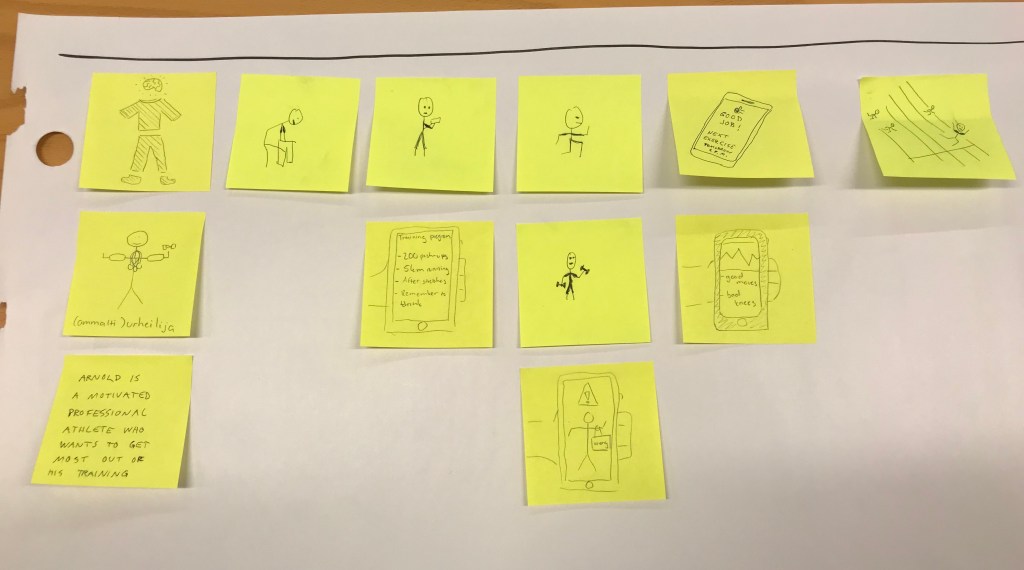
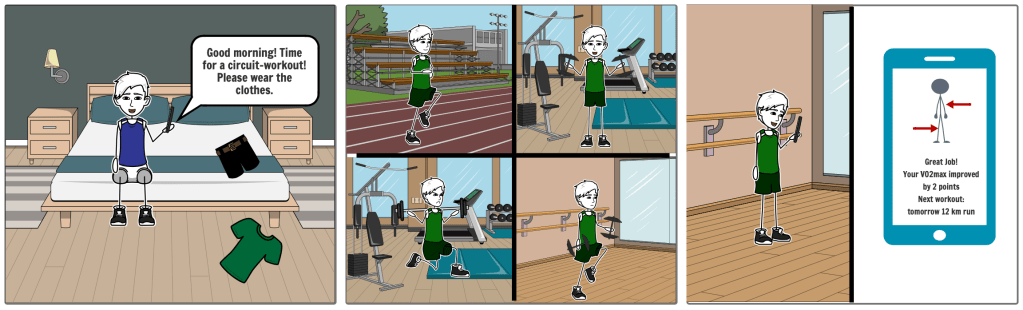
We first created a pencil sketch of the storyboard on post-its. The scenario in the storyboard is that a user, in this case a professional athlete wakes-up in the morning and the add-on application of the product suggests a workout. After this the user decides to go do the workout and puts on the wearables. The wearable sensors track the movements and the progress the user does during the workout and after finishing the workout the application gives feedback on the form and movement of the exercises and how they could be bettered and what to focus on. In addition it suggests when to workout next.

Storyboard sketched on post-its.

After the pencil sketch, we made a more sophisticated storyboard with storyboardthat.com. This version can be seen below.

More stylised version of the storyboard.

MVP validation

The MVP vas validated by submitting a questionnaire to several social media groups. The full results can be seen in the file further below. The questions we asked were:

  • What sports do you do
  • Would you use this product
  • Why / why not

The results were from varied sports, including climbing, running, badminton, gym and cycling. There were 18 answers of which 12 would be interest in using the product, albeit some with the condition of the product being modestly priced. Some users were interested in tracking how and what muscle groups they used, while others stated that the product would probably be better suited for more serious athletes. Emotional responses focused on doubts about technological practicalities, but also had some equating the product with sports watches and fitness trackers.

#4 Personas and results of ideation sessions

We saw that the customers can be split in to three different segments: beginner, intermediate and professional users. After this we created three different personas that fit each segment to see what are their needs and how would they react to the product.

We followed Rikke Friis Dam’s and Yu Siang Teo’s article “Personas – A Simple Introduction” to create our personas. We decided first to create goal-directed personas to introduce ourselves to the concept and get a deep dive on to the segments mentioned before. It was quite interesting to do the personas and try to fully get into the mindset of the people we were describing. The three goal-driven personas are below.

Goal oriented persona 1, active student woman:

  1. Persona
  • Attitudes towards sports: positive, wants to get better and has goals that they want to reach. Is active already but wants to gather data and get better.
  • Motivations: Wants to be healthy and perform on a high level on every aspect of their life. Thinks health is an intrinsic valua on itself and is motivated to keep it
  • Goals: Wants to be fit and be in good shape overall. Is training for a half-marathon for the first time and this is the reason they started use the product.
  • Pain points: being consistent with the training and keeping track of all the factors affecting health overall 

2. Scenario

  • The scenario is that the user is busy during the days with school and sometimes work. Usually they train in the morning or in the evening. The persona prioritises school over training when they collide because they see good grades as more valuable at this point of their life. They have a training schedule but one of the most important factor in the schedule is flexibility.

3. Goal

  • Goal is reached after the half-marathon has been completed.

Goal oriented persona 2, middle-aged man:

  1. Persona
  • Attitudes towards sports: quite negative, hasn’t really ever done sports during his adult life and is a beginner, but has now realised that he needs to start exercising to extend his life expectancy. 
  • Motivations: Has been informed by doctors that he needs to start exercising or he is in the risk of developing numerous illnesses such as heart disease, type 2 diabetes, etc. Has friends that do sports together and wants to do sports with them but is quite nervous about his fitness and if he’s able to perform like them. 
  • Goals: Wants to lose weight, develop new healthy habits and get out of the danger of developing different diseases. Also wants to become more fit and get knowledge about different exercises so that he can exercise together with his friends. 
  • Pain points: sticking to the diet and exercising consistently. In addition, he has to learn exercise movements and get feedback about his form so to evade injuries. 

2. Scenario

  • The scenario is that the user is working during the days and trying out exercises in the evening. He works usually sitting down in front of a computer the whole day, occasionally going in to meetings. The office he works in and also his home has a lot of snacks etc so he faces temptations to break his diet often. He needs regular reminders to stick to the plan he is on and have personal assistance to conquer the major obstacles he faces, such as starting new sports and where to begin, how to go out of his comfort zone

3. Goal

  • The goal of the user is to introduce healthy habits such as walking more, eating better and more regularly, and exercising more. Losing 10 kg in the long run but most importantly losing the bad habits he has developed.

Goal-oriented persona 3, professional athlete:

  1. Persona
  • Attitudes towards sports: very positive, sports are their lifestyle and they train goal-oriented every day. 
  • Motivations: He enjoys winning and has a competitive mindset and has a lot of internal motivation to better himself all the time. Furthermore he’s livelihood also depends on doing well in the discipline he trains in and competitions/league he participates in.
  • Goals: Wants to win major trophies and earn money in the meantime
  • Pain points: evading injuries, etc

2. Scenario

  • The scenario is that the user has a lot of resources already, such as trainers and coaches, so he is mostly interested in very specific data that can be gathered easily around the clock. 

3. Goal

  • The goal of the user is to reach peak performance, collect and analyse in-depth data about recovery and training. Goal is to perform best during games and win. 

After this we created engaging personas for all three segments to get a more comprehensive picture of the segments. Below are the engaging personas.

Engaging persona representing beginners, Beginner Bert.
Engaging persona representing intermediate segment, Normal Nina.
Engaging persona representing professional segment, Athlete Arnold.

As the personas portray, the needs the segments have differ greatly, especially the beginner and professional. The beginner needs very basic instructions for starting exercising and help with all the aspects of healthy living. In addition, the beginner may have the least amount of resources to put into exercising. In the other end of the spectrum, the professional has the most amount of resources. They have time and coaches to help them already and the biggest need they have is the 24/7 collecting of data the product can offer. In between these is the intermediate user. They already have enough knowledge about exercising and the most important use for the product is fine-tuning.

Results of ideation session

We couldn’t really decide which one of our ideas was the most desirable of them all, because in the field of sport technology, it is very often the case that the devices and services are not desirable as such but because of the health benefits they may give. Hence our ideas have mostly instrumental desirability.

During the initial solo ideation phase during the 4th workshop this week, we came up with a total of 8 ideas. After these ideas were cycled to other members of our team, this expanded into 13. After combining and reverse-ideating, we had a total of 52 ideas. The initial solo ideas developed slowly, as we each had our own precognitions and doubts about them, instead of just listing everything that popped into our minds. After the first phase we started to relax and threw in some that might not be as viable but proved to be a good base for developing other ideas.

The three criteria we chose as the basis for our evaluation were most useful, most futuristic, and most feasible. We regarded smart clothing as the most useful of our ideas. In our vision of future, clothing could be used to sense muscle activity, tension, and oxygenation. In addition to that, clothes could track the posture of the user in everyday life as well as when doing sports, and based on that suggest e.g. better trajectories. The downside of implementing tracking devices into clothes is that they need to be washed regularly and the user might need several pieces of same clothes to maximize the benefits.

The most futuristic of our ideas was food scanner that would tell the user the nutritional value of any meal or snack using a picture taken with a smartphone or smart glasses. If used widely this kind of application would have huge implications even to the national health, not to mention the health of motivated individuals. However, we have doubts concerning the accuracy of this kind of a scanner and don’t think it would be feasible in the near future.

As our most feasible idea, we bundled a couple of our ideas under the label “AR/VR solutions”. Guidance in new jogging paths, virtual tour of a gym, and instructions for better exercise moves were among the ideas that came to our mind. These should encourage people to exercise and could be implemented already with today’s technology. The main drawback of these ideas is that they do not probably add enough value to be judged worthy of adoption by the users.

#3 Stakeholders and Customer Groups

Only one of us (Erkka) was able to attend the third workshop, so the Power/Interest Grid for Stakeholders and Customer Grouping Canvas represent his ideas on these topics. However, we agreed that the pictures will be uploaded as they are and that all of us can then comment on them to explain their own ideas. This way our thought process also becomes visible to the reader, which is a happy consequence of working this way on this particular blog post.

Power/Interest Grid for Stakeholders

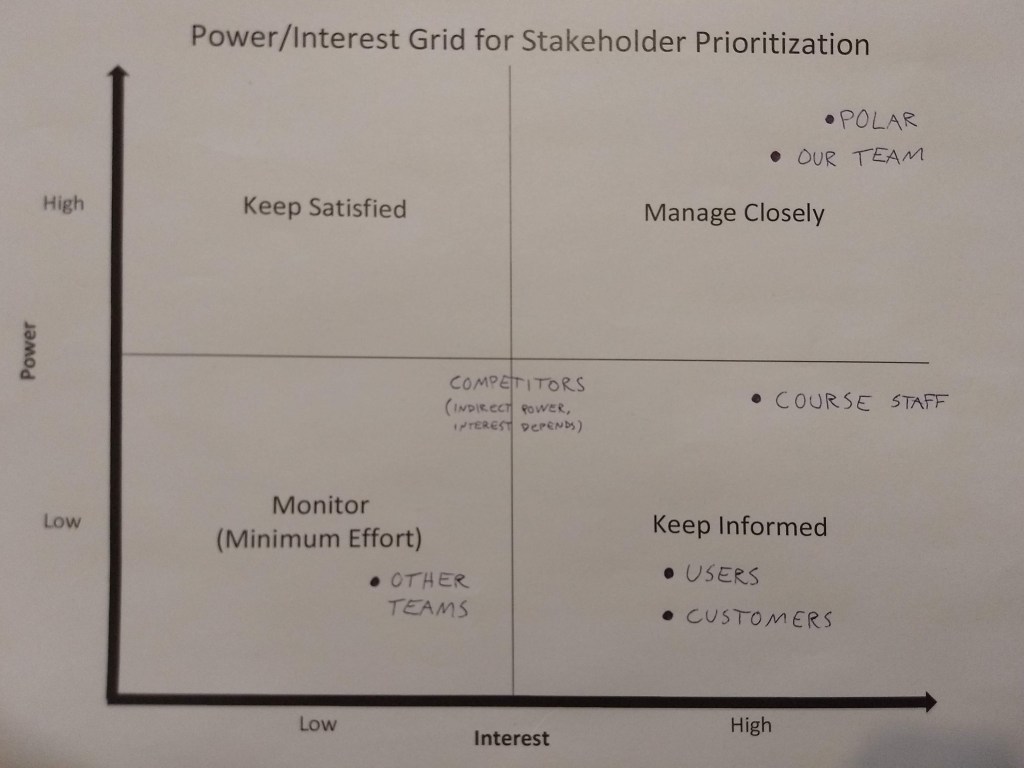
Power/Interest Grid

The Power/Interest Grid includes seven different stakeholders. Thinking of their placement in this grid wasn’t as easy as one might at first imagine. Moreover, the position of each depends very much on the phase of the project (planning/executing/product delivered), so the grid is at best a coarse approximation.

Polar, being our “customer”, would have very high power and interest if this were “real” project. In reality, in the case of this course project, their interest may not be that high, and even though they have power, they seem not to be willing to use it that much, but instead have given us quite a lot of freedom to define in which direction to take this project. Naturally, our team also has lots of both power and interest.

Course staff doesn’t have that much power in directing our project, though they may affect it by giving us helpful feedback. However, they are paid to be interested in it, so it is supposed they will be. Our product’s users and customers are predicted to be very interested in our product, though that remains to be seen.

Other teams on this course most probably do not have very much interest in our project, unless we develop something extraordinarily awesome. Nevertheless, during the development process, there won’t be much interest. Same applies to the power of other teams: unless we become aware of some of their ideas, and try to apply them ourselves, they will not have much power, even of the indirect kind.

Placing our (or Polar’s) competitors on the grid was most difficult, so they were set in the middle without a dot denoting their “exact” position. Competitors are important stakeholders, though, so they had to be placed somewhere. Their interest depends very much on our final product and how directly it competes with their products or how likely it is to steal their market share. They don’t have direct power over our project, but at least bigger companies may have significant indirect power that has to be taken into account. In a more detailed grid, noteworthy competitors would be considered individually.

Customer Grouping

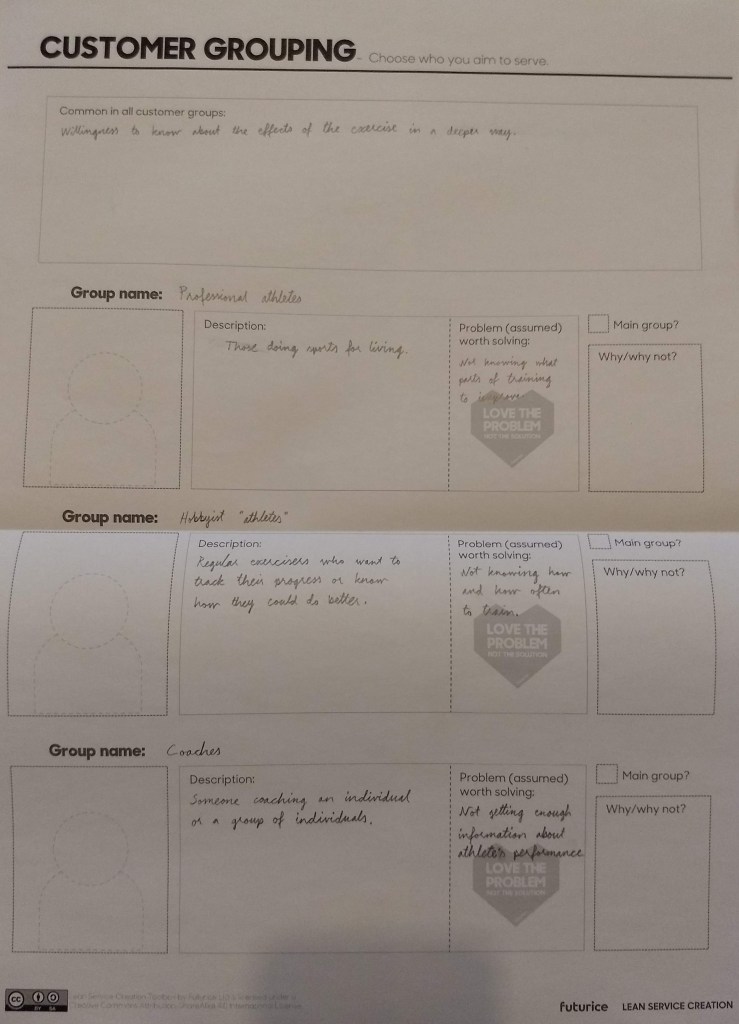
Customer Grouping

During the workshop three main user groups were identified: professional athletes, hobbyist “athletes” (meaning ordinary peoples who like to do sports), and coaches. Common to all of these groups is willingness or desire to have a deeper understanding of the effects of the exercise.

Professional athletes most probably already know quite a lot about their exercises’ efficiency and may also be better than an average person at listening to their body. Their (assumed) problem is therefore not knowing where to improve, since they are already doing as much as they can to perfect their performance. In addition, professional athletes want exact information about their performance.

Ordinary people who exercise usually have considerably less knowledge about their exercise compared to the professional athletes. They would likely benefit a lot from knowing when it is wise to exercise and when to rest as well as what kind of exercises are most beneficial at any given moment in their training schedule. Their assumed problem is not knowing when and how to train in the most effective way and how to avoid getting injured.

Coaches are comparable to professional athletes in their knowledge of the effects of the exercise. Therefore their problem is similar to the athletes’ one. There’s also the subgroup of coaches who train teams. In their case the performance of the entire team is more important than the performance of its individuals, so their main problem is not knowing how the performance of single athletes translates into the performance of the entire team.

User research

We performed a some intercept interviews both during the workshop and the on-going week. The questions we asked were:

  1. Do you do sports?
  2. What kind of sports do you do? 
  3. How would you describe your relationship to technology in general? 
  4. How would you describe your relationship to sport-related technology in particular? 
  5. How often do you exercise? 
  6. Do you use any tracking device when exercising? Why/why not? 
  7. What do you think is the greatest benefit of using such a device? 
  8. Do you find the information given by the device useful? 
  9. What information about your exercise would you like to have? 
  10. In what ways do you keep track of your well-being? 

The results are compiled into this file (unfortunately some in Finnish):

The results were quite varying, but gave us a better idea what our potential users. Most of our interviewees were already familiar with sports-related technology, said they did sports at least a few times a week and used some kind of a fitness tracker. They listed heart rate, motivation, progress and general performance as the most useful information given by the devices and wished to have information about stretching, possible routes, heart rate zones for aerobic/anaerobic exercising and recovery.

#2 Standards and trend maps

In our project we will follow the guidelines set down by the ISO 9241-210: 2019 standard about “Ergonomics of human-system interaction: Human-centred design for interactive systems.”

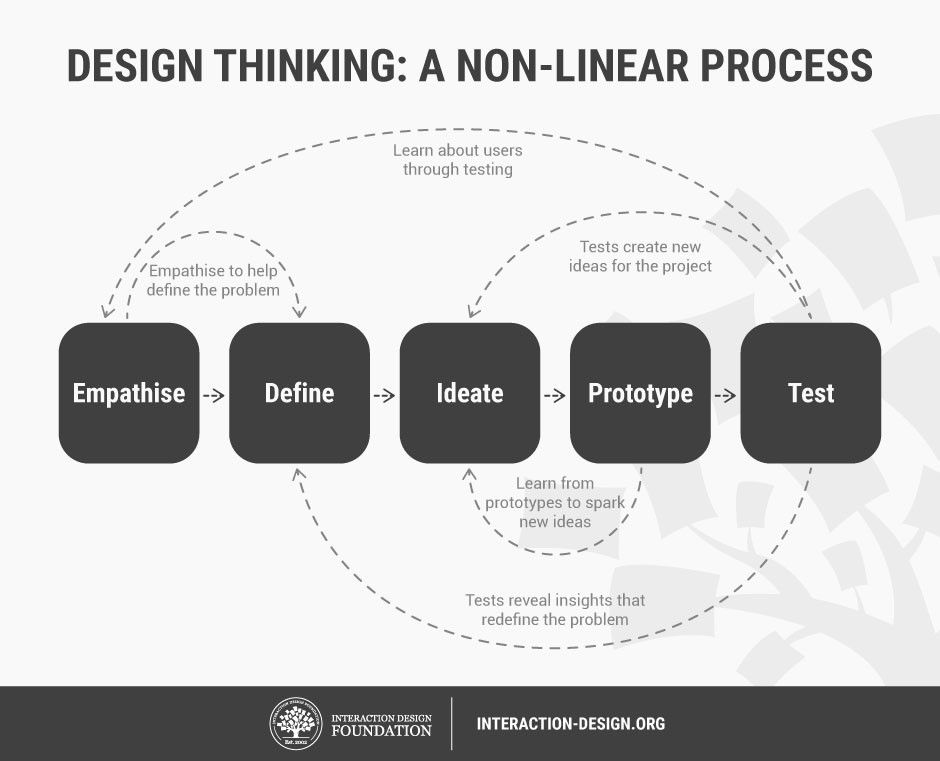
Copyright holder: Teo Yu Siang and Interaction Design Foundation. Copyright terms and license: CC BY-NC-SA 3.0

The standard describes an iterative loop for designing human-centered solutions. The key parts of the loop are understanding the problem, the users and the environment, creating criteria for the understanding i.e. requirements, creating ideas, validating them preferably with users and iterating on the evaluations.

Understanding the context: we will explore the existing designs. This includes various web sites, devices and apps. We would like to interview different users of these systems to find out what their needs and expectations are. Based on these we will form key requirements, brainstorm design ideas and validate those against the requirements. No idea is thrown away. Some ideas can be used to further iterate new ideas based on them. Prototypes of the best ideas could be made to further test them. These prototypes could then be evaluated either with users or with heuristic methods.

User involvement and user-centered evaluation: potential and existing users of the coming design and existing solutions will be used to gather metrics about prototypes and existing designs.

Iterative process: The design should be improved by going through the loop again and again when an idea has been found and prototyped.

We have also looked into the ISO 9241-410 and 9241-920 standards, as our solution would probably include a tactile device of some sort. 410 “Design criteria for physical input devices” describes properties and requirements for designing ergonomic and usable physical devices, also covering touch-input devices like Polar smart devices. 920 “Guidance on tactile and haptic interactions” contains information about existing tactile and haptic interfaces, general design guidelines for related hardware and software and specific guidelines for different kind of media that might be used with the tactile or haptic interface.

However we would like to first explore the customer task further before locking down parts of our process. Hardware might not also be relevant, as it could only be a part of the design solution.

Trends in sports and technology

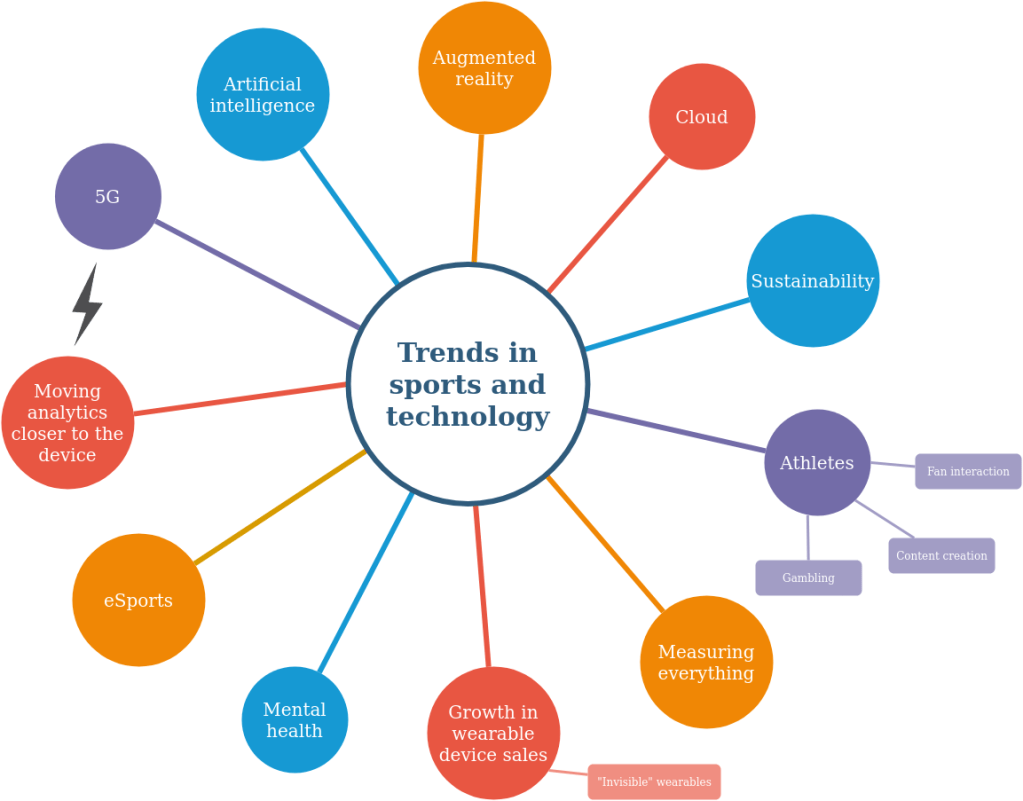
Trend map representing some trend regarding sports and technology

This trend map includes the trends that somehow relate to sports and technology. Some larger mega trends (e.g. sustainability) affect virtually every part of society, so these do not need further commenting. Being very important they are nevertheless included in this map.

One of the interesting findings is that while some bet on 5G and cloud, others predict that in wearable devices analytics will be moved closer to the device to reduce network congestion. These kind of (maybe only superficially) contradicting claims illustrate the difficulty, or rather impossibility, of predicting the future. Despite that, long-term trends can be really helpful, when trying to design a product for future.

Gartner predicts that sales of wearable technology will continue to grow at least this year and the next. They also predict that by 2023 one tenth of wearables will be unobtrusive, because capabilities to make devices even smaller will increase. According to them, these almost invisible devices will attract even the users that are currently reluctant, so it seems safe to assume that growth in wearables will continue.

We think the most important trends regarding our project are obviously Artificial Intelligence, growth in wearable devices and trends regarding athletes, such as interactivity with fans and content creation. Secondary trends that are especially important are augmented reality and 5G/analytics moving to the device. We chose these trends because our product assignment is about how to use AI in consumer sports devices and how to guide people reach their goals. These trends will affect the usability of our product in the future much more than the other trends mentioned above.

Furthermore, a trend we are not going to focus at all directly is eSports. This is because we see that it doesn’t clearly fit into Polars portfolio of products or their mission. Other trend we are not going to directly focus on is mental health. Sports has a lot of influence on mental health but it’s quite hard to track effectively with wearable technology in the near future and it also can lead to bad outcomes since people might self diagnose themselves with mental disorders on the basis of the data and this creates a legal risk for Polar since Polar isn’t a doctoral service who can correctly diagnose people.

Sources:

D. Anzaldo, “Wearable sports technology – Market landscape and compute SoC trends,” 2015 International SoC Design Conference (ISOCC), Gyungju, 2015, pp. 217-218.

Gartner Says Global End-User Spending on Wearable Devices to Total $52 Billion in 2020

Sports technology in 2020: the key trends to watch this year

#1 Team Polar Bears

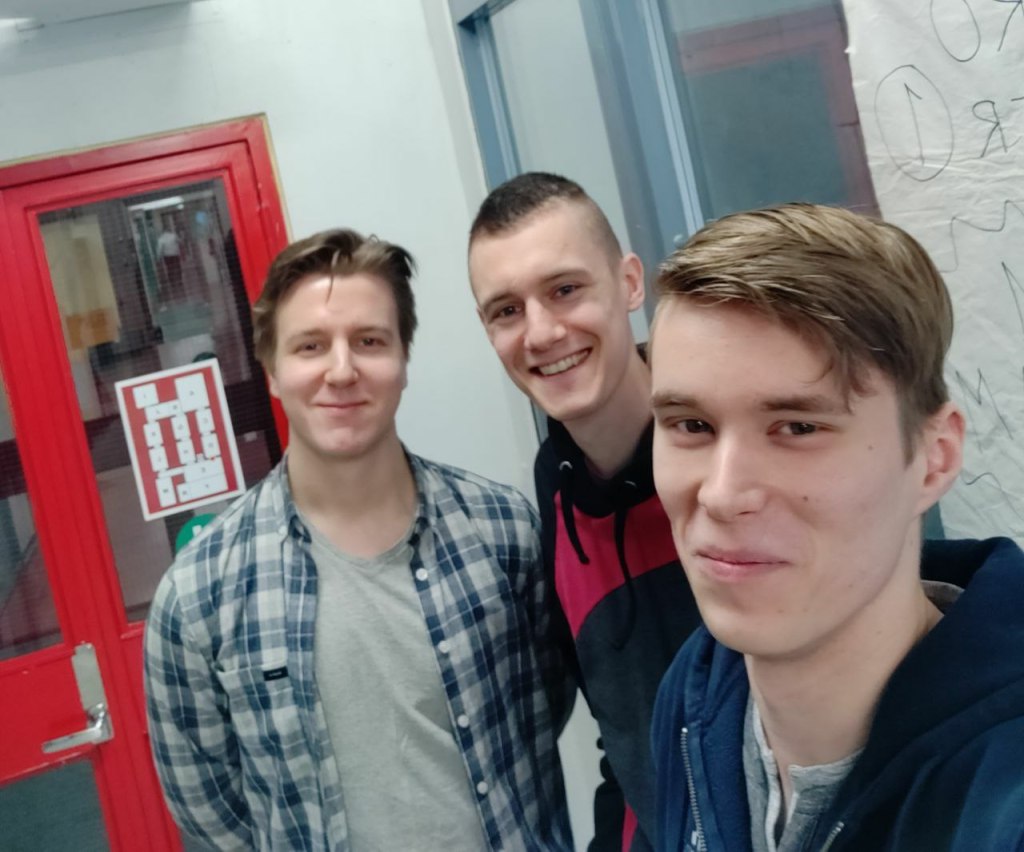
From left to right, we are Anton Pikkupeura, Erkka Juhaninmäki and Esa Niemi.

Anton is a third year bachelor’s student in industrial engineering and management. Erkka is a first year master’s student majoring in Human-Technology Interaction. He enjoys reading and sports (both doing and watching). Esa is a fifth year software engineering and UX student from Hervanta. He likes climbing and board games.

Our team’s project partner is Polar Electro. The project description was “How to Use Artificial Intelligence (AI) in Sport Exercise Guidance? Context is Polar and Polar’s customers”. We chose this project as our first option because all of us do or follow sports but are not exactly fitness models. The idea also seemed to be the most approachable one.

Our team’s goals are to stay open, communicate and make progress. We selected these goals as they are things that are crucial for successful project work, but in academic course work they tend to be forgotten. We are going to track and evaluate this by maintaining active communication in our Telegram group, following the progress of others, talking and solving impediments, allowing the project manager to make decisions and by setting soft deadlines before the actual dates.

We decided to try to divide the project work equally into parts so, that in theory everyone has the same amount of work to do at a given time. Anton is our Project Manager and also has prior experience of video editing, which will be useful with the video task. Erkka and Esa are more interested in doing the more practical work and Esa has also volunteered to do most of the talking in the video. We will make decisions and solve conflicts by talking them through and reaching a majority consensus.

Important factor in making our team work well together is to get to know team members well and to be able to trust in them to do the work divided. We believe this will get better as the project proceeds but now we have met couple of times and chatted in Telegram. We have decided on creating an online drive where we can easily share files and work on them together if needed. In addition we decide in advance who is responsible of what tasks and set internal deadlines on the tasks so that we can be sure they get done before the final deadline. We have emphasized that if a team member needs help with their task, they can always ask others to help and others will help gladly. We believe that key to productivity and effectiveness is transparency within the team and being able to work with the strengths and motivation of each team member.

We meet weekly on Thursday’s workshops, which is a good occasion to share the results of the work done. Despite meeting weekly, Telegram will probably be more useful for reporting individual contributions to other team members, because it’s more immediately available. This way we can keep track of the individual progress “in real time” and will also be able to help each other when needed. We will evaluate the contributions against the requirements and wishes of our project partner as well as the needs of the prospective users. The exact nature of this evaluation will become clearer when we get more information about the project.

Feedback on the first workshop

The first workshop was about team formation. Although knowing the theory about the matter is of course important, putting the theory in practice is vital in building team spirit. The activities were mostly fun, and probably helped these reserved Finnish males relax. Especially good was the task of trying to replicate a toy for a “customer” using only paper, markers, scissors, glue and sticky tape. Our team’s result was impressive and promises good for our future!

Create your own website, free on WordPress.com.Create your own website.
Start free