MVP
Our minimum viable product (MVP) was created using story mapping method described in this article. We started by thinking what would the user’s story look like when using the product for the first time and separated this process to five stages: setup, preparation (for the first exercise), exercise, feedback, and after the exercise. In real life situation feedback is not necessarily its own separate step, but instead happens both during the exercise and after it. However, the stage includes distinctive features, that couldn’t be included in either “during the exercise” or “after the exercise” without including them in both.

We decided that the application is the only necessary feature of the setup stage. Features left out of the MVP were calibration of the smart clothes and preliminary test for the exercisers. In preparation stage the only feature above the MVP line is defining a goal for the exercise. In fact, even this feature could have been left out of the MVP, but it was the most useful of the features in this stage so we decided to include it.
During the exercise itself the most important features are movement tracking and measuring the muscle activity. We left out features like heart rate monitoring and information on calorie consumption, because most of the people who would use our product are very likely to already have other devices that keep track of those things. Feedback “stage” (that, as mentioned earlier, is not actually a separate stage) includes information about the progress made and about recovery. Nutritional suggestions were left out. After the exercise the MVP would give recommendation on how and when to exercise next time. The feature that wasn’t included was sharing the information about the exercise in some social platforms.
Storyboard of the product
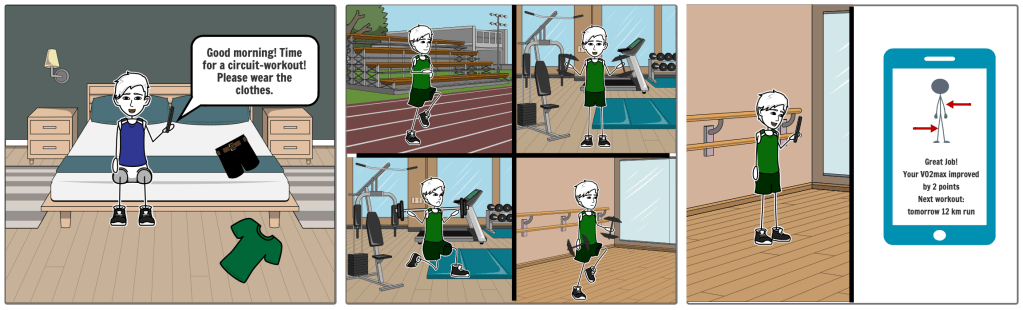
We first created a pencil sketch of the storyboard on post-its. The scenario in the storyboard is that a user, in this case a professional athlete wakes-up in the morning and the add-on application of the product suggests a workout. After this the user decides to go do the workout and puts on the wearables. The wearable sensors track the movements and the progress the user does during the workout and after finishing the workout the application gives feedback on the form and movement of the exercises and how they could be bettered and what to focus on. In addition it suggests when to workout next.
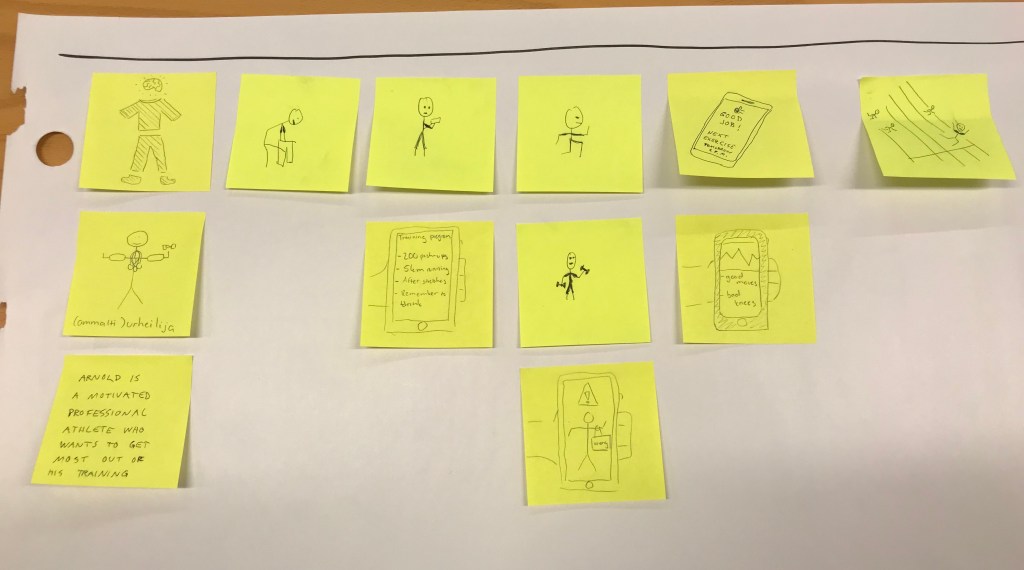
After the pencil sketch, we made a more sophisticated storyboard with storyboardthat.com. This version can be seen below.
MVP validation
The MVP vas validated by submitting a questionnaire to several social media groups. The full results can be seen in the file further below. The questions we asked were:
- What sports do you do
- Would you use this product
- Why / why not
The results were from varied sports, including climbing, running, badminton, gym and cycling. There were 18 answers of which 12 would be interest in using the product, albeit some with the condition of the product being modestly priced. Some users were interested in tracking how and what muscle groups they used, while others stated that the product would probably be better suited for more serious athletes. Emotional responses focused on doubts about technological practicalities, but also had some equating the product with sports watches and fitness trackers.
 Polar Bears