In our project we will follow the guidelines set down by the ISO 9241-210: 2019 standard about “Ergonomics of human-system interaction: Human-centred design for interactive systems.”
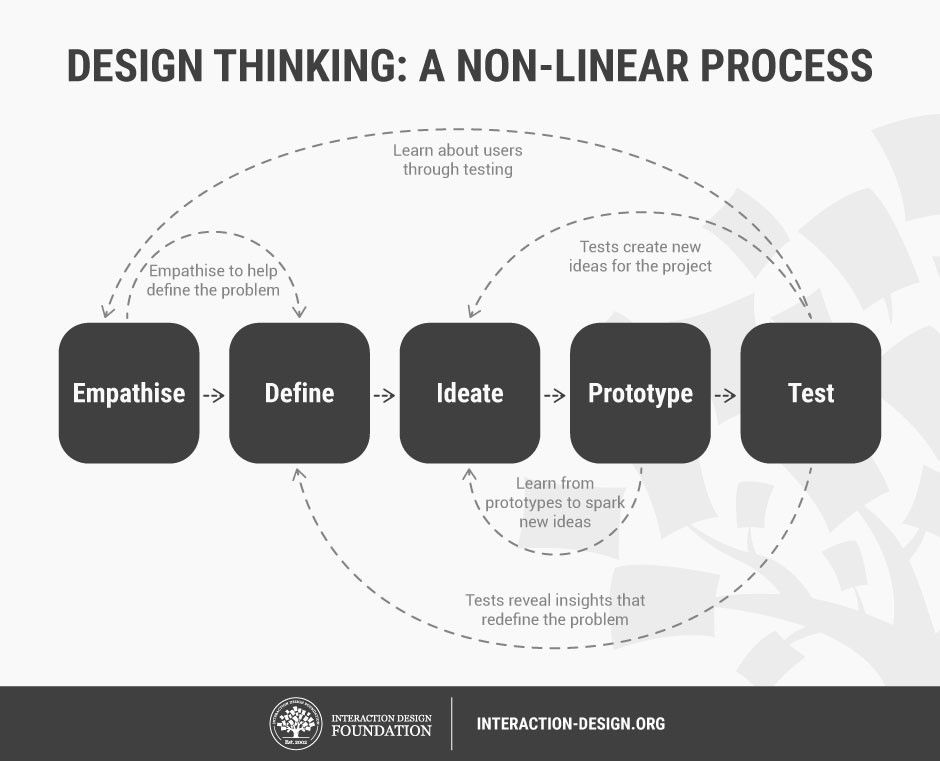
The standard describes an iterative loop for designing human-centered solutions. The key parts of the loop are understanding the problem, the users and the environment, creating criteria for the understanding i.e. requirements, creating ideas, validating them preferably with users and iterating on the evaluations.
Understanding the context: we will explore the existing designs. This includes various web sites, devices and apps. We would like to interview different users of these systems to find out what their needs and expectations are. Based on these we will form key requirements, brainstorm design ideas and validate those against the requirements. No idea is thrown away. Some ideas can be used to further iterate new ideas based on them. Prototypes of the best ideas could be made to further test them. These prototypes could then be evaluated either with users or with heuristic methods.
User involvement and user-centered evaluation: potential and existing users of the coming design and existing solutions will be used to gather metrics about prototypes and existing designs.
Iterative process: The design should be improved by going through the loop again and again when an idea has been found and prototyped.
We have also looked into the ISO 9241-410 and 9241-920 standards, as our solution would probably include a tactile device of some sort. 410 “Design criteria for physical input devices” describes properties and requirements for designing ergonomic and usable physical devices, also covering touch-input devices like Polar smart devices. 920 “Guidance on tactile and haptic interactions” contains information about existing tactile and haptic interfaces, general design guidelines for related hardware and software and specific guidelines for different kind of media that might be used with the tactile or haptic interface.
However we would like to first explore the customer task further before locking down parts of our process. Hardware might not also be relevant, as it could only be a part of the design solution.
Trends in sports and technology
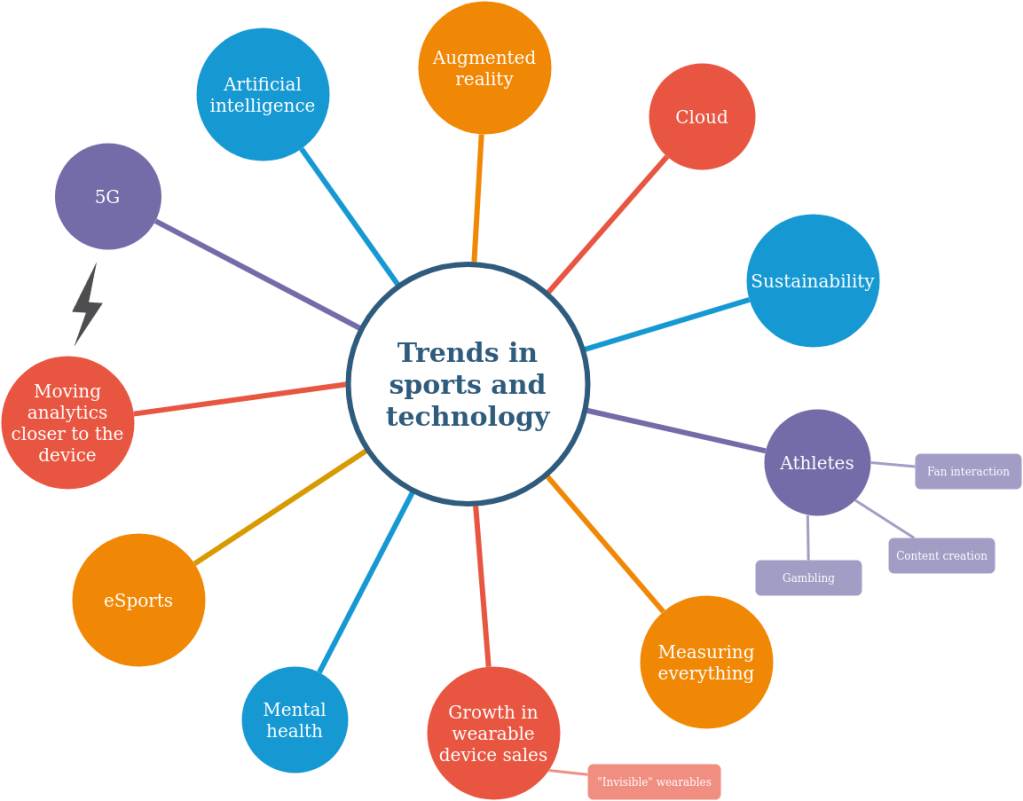
This trend map includes the trends that somehow relate to sports and technology. Some larger mega trends (e.g. sustainability) affect virtually every part of society, so these do not need further commenting. Being very important they are nevertheless included in this map.
One of the interesting findings is that while some bet on 5G and cloud, others predict that in wearable devices analytics will be moved closer to the device to reduce network congestion. These kind of (maybe only superficially) contradicting claims illustrate the difficulty, or rather impossibility, of predicting the future. Despite that, long-term trends can be really helpful, when trying to design a product for future.
Gartner predicts that sales of wearable technology will continue to grow at least this year and the next. They also predict that by 2023 one tenth of wearables will be unobtrusive, because capabilities to make devices even smaller will increase. According to them, these almost invisible devices will attract even the users that are currently reluctant, so it seems safe to assume that growth in wearables will continue.
We think the most important trends regarding our project are obviously Artificial Intelligence, growth in wearable devices and trends regarding athletes, such as interactivity with fans and content creation. Secondary trends that are especially important are augmented reality and 5G/analytics moving to the device. We chose these trends because our product assignment is about how to use AI in consumer sports devices and how to guide people reach their goals. These trends will affect the usability of our product in the future much more than the other trends mentioned above.
Furthermore, a trend we are not going to focus at all directly is eSports. This is because we see that it doesn’t clearly fit into Polars portfolio of products or their mission. Other trend we are not going to directly focus on is mental health. Sports has a lot of influence on mental health but it’s quite hard to track effectively with wearable technology in the near future and it also can lead to bad outcomes since people might self diagnose themselves with mental disorders on the basis of the data and this creates a legal risk for Polar since Polar isn’t a doctoral service who can correctly diagnose people.
Sources:
D. Anzaldo, “Wearable sports technology – Market landscape and compute SoC trends,” 2015 International SoC Design Conference (ISOCC), Gyungju, 2015, pp. 217-218.
Gartner Says Global End-User Spending on Wearable Devices to Total $52 Billion in 2020
Sports technology in 2020: the key trends to watch this year
 Polar Bears